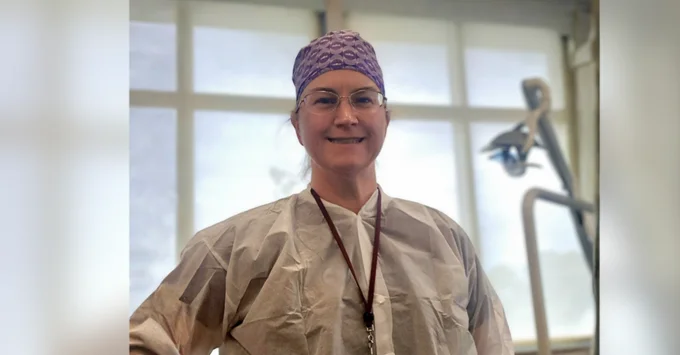
An Interview with ADHA President Elect Christina Emmert, RDH, PHDH, PRP, FADHA
By ADHA Staff
October 15, 2026
HOW IT STARTED
How did you end up in public health?
I actually never intended to. I grew up going to a small private dental office, and I pictured myself practicing in one just like it. About six years into my career, I met a dentist from our community health center who asked if I knew any hygienists looking for work. They hadn’t had one in the center in two years. I was happy in private practice four days a week, so I offered to fill in on Fridays until they found someone full time.
That was 1999. I stayed there part time for years, splitting my week with a private office, and went full time at the center about 14 years ago. In February I’ll have been there 28 years. I was only going to help until they found someone, and it ended up being a good fit.
What does a typical day look like, and who are your patients?
Everyone sees the dentist for an exam first, and the dentist sends them to me for hygiene treatment afterward. I do hygiene all day, so there’s no break to take x-rays or wait on an exam. That can be overwhelming for hygienists who are used to those pauses in their workday.
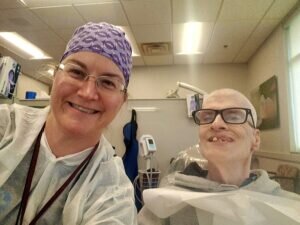
Christina Emmert with a patient at Crusader Community Health Center. Photo courtesy of Christina Emmert with patient consent.
I practice at three locations, one each day, and I’m the only hygienist there. Any child whose family calls can get an appointment. Adults have to be patients of a medical provider at the health center and have a health condition we’re working on, such as diabetes, heart disease, an active pregnancy or a clearance for cancer treatment. We take Medicaid, Medicare and private insurance, with a discount program for patients who pay out of pocket. With a high no-show rate, my day can be six patients or twelve.
What is a PHDH?
In Illinois, it stands for public health dental hygienist. It grew out of our direct access legislation, and in certain settings, including my health center, a hygienist with the certification can start treatment without the dentist doing an exam and x-rays first. But you don’t need a PHDH to work in community health. At our center it mattered most when we had two certified hygienists and too few dentists, because it got patients seen sooner.
THE WORK
What did you have to learn after private practice?
Flexibility, mostly. In private practice it’s sometimes easier to say, “You’re 15 minutes late, you’ll need to reschedule.” We try hard to see our patients, because they have a lot of reasons for being late. Recently a mom misunderstood our automated confirmation call and inadvertently canceled instead. The family showed up anyway, so we worked them in. Some days are packed and some are slow, and you have to be okay with both.
I’ve also had to learn about cultural competency, which wasn’t much of a focus when I graduated over 30 years ago. Health literacy is a real issue, so it can be a lot of show and tell to understand and be understood.
Public health isn’t for everyone. As hygienists, we tend to like the rules, and in community health you learn to let some things go.
What do people get wrong about public health hygiene?
That it’s an assembly line, patients in and out in ten minutes. When I first started, my schedule was packed that way, so I spoke up. My appointments are shorter because I’m not waiting on exams or taking x-rays, but it’s not ten minutes. When someone doesn’t show, I have more time with the next patient.
There’s also more to a patient than the cleaning. Sometimes teeth aren’t the most important thing in their life that day, so if they want to talk about something else, we do.
What does it look like when medical and dental care work together?
Our medical and dental charts are together, so I can see a patient’s whole picture. I ask diabetic patients whether they’ve checked their blood sugar that day. One patient came in with a very high reading. She told me she hadn’t taken her insulin in weeks because she was sending money to family instead of buying medication. She’d also missed her last medical appointment, so I messaged her provider to connect her with our discount program.
Another patient’s chart said he was diabetic, but he told me he knew nothing about it and wasn’t on any medication. We walked him over to medical, and they got him under a provider. Now when I check his blood sugar, I tease him about how good it looks. He says, “Thanks to you.”
WHY IT STAYS WITH YOU
What has kept you there for nearly 28 years?
I was lucky to have regular dental care as a kid, but we weren’t rolling in money. My dad was a machinist and my mom waitressed, and his factory job came with dental insurance. A lot of my patients are in the same spot. For a while we had a clinic in my old high school, in the neighborhood where I grew up. I’d tell those kids, “I grew up where you live.” These are my people.
Kids ask me about life, like how I decided to go to college, or about drugs, or whether I’ve ever done something I regret. They’re trying to figure out their own lives, and many don’t have a great adult to talk to. They’ll say, “Thanks for talking to me,” and I tell them, “Thanks for listening.”
One young patient hesitated when I asked about recent hospitalizations. She said it was for mental health, and she was embarrassed. I told her mental health is a health issue, the same as a hospital stay for a heart attack, and she could say whatever she needed to say. Before she left, I asked if I could give her a hug, and I told her to keep getting the support she needs.
Resources for Your Well-Being and Your Patients’
Dental hygienists face unique mental health challenges throughout their careers. ADHA’s Mental Health & Well-Being page gathers self-assessments, support networks, mentorship, continuing education and research, curated with help from Sherri Lukes, RDH, MS, FAADH.
LEADERSHIP AND ADVICE
How did association leadership grow alongside your clinical work?
I’ve always been a member, but I didn’t get involved until about 2006, after 13 years as a hygienist. I started going to my local component and volunteering at things like Give Kids A Smile days. Then you get pulled in. You become an officer, go to a state meeting and meet people who encourage you. I served on our state public health committee alongside Sherri Lukes, one of my hygiene school instructors, who was excited when I went into public health and always had me talk to her students.
My employer has been supportive. When I need time off for the association, they’ve never told me no, and they see the leadership skills carry over to work.
In recent years, ADHA presidents have come from education, clinical practice, entrepreneurship and now public health. What does that say to you?
I think it helps us see ourselves as possible leaders. You don’t have to fit a certain mold or work in a certain area of dental hygiene to be a leader in our association.
What would you tell a hygienist who’s curious about public health?
Reach out to a community health center near you. I’m sure any hygienist working at one would be glad to meet with you. Colleges ask me to talk to students about public health every year, and I’m happy to.
Volunteering can be a good peek, because you’re working with the same populations. I’ve volunteered at church-run clinics in the Chicago suburbs. But to understand the details, you need to talk to a hygienist, and every community health center works differently.
Curious? Volunteer.
Through ADHA’s partnership with Colgate® Bright Smiles, Bright Futures®, you can join the Mobile Community Program and help children in your community build healthy oral health habits. It’s a good way to see public health up close. Opportunities are available in select states. Sign up to volunteer >>
“I feel like I’m making a difference, not only in their oral health, but a lot of the time…in their lives.”
— Christina Emmert, RDH, PHDH, PRP, FADHA
____________________________________
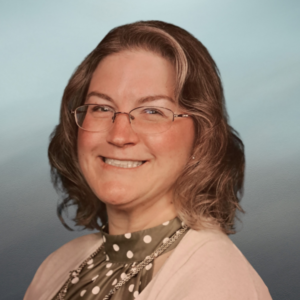 Christina Emmert, RDH, PHDH, PRP, FADHA, is ADHA’s president-elect and a lifelong resident of Rockford, Illinois. A 1993 graduate of Southern Illinois University–Carbondale, she has spent her career serving underserved populations as a clinical public health dental hygienist at Crusader Community Health Center, where she has worked since 1999. She has served as President of the Winnebago Dental Hygienists Society and the Illinois Dental Hygienists’ Association, Speaker of the House for both the Illinois association and ADHA, and Director of ADHA District VIII.