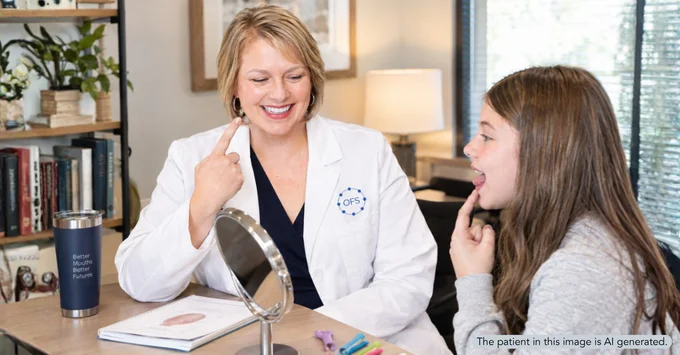
By Joy Lantz, RDH, PHDH, COM®, IBCLC, FADHA
October 12, 2026
The Questions That Started It All
I didn’t discover orofacial myology because I was looking for a new career. I discovered it because I was looking for answers for my children. As a registered dental hygienist, I was comfortable talking about teeth, gums and oral hygiene. When my own children began experiencing challenges with feeding, sleep and oral habits, I found myself asking questions I couldn’t answer. I started my search as a mom who wanted to understand what was happening, not a clinician looking for another credential.
When Curiosity Became a Calling
My oldest son was born in 2001. He was six weeks premature and struggled with reflux issues. At the time, the only answer seemed to be a prescription. My second son was born in 2003 and had persistent sleep issues from the beginning. My daughter was born in 2006 and even though I was a more experienced mom by then, she was the most challenging feeder and sleeper of them all. She also came out of the womb sucking her thumb, a habit that lasted until she was six. It was at this time that I started asking questions.
My sons both had gummy smiles and my daughter had an open bite with a crossbite. I understood oral health, but I never made the connection between the issues they were experiencing and the function of their mouths. Nobody seemed to have the answers I was looking for so I did what any mama bear would do; I researched. When I stumbled into the world of oral myofunctional issues, something clicked. I remember wondering why I had never encountered these concepts in my dental hygiene education. The connections made so much sense. The more I learned, the more I wondered how many of the things I discovered in my children were things I was missing with my dental patients.
I still had so many questions, so I decided to make a list and reach out to practicing orofacial myologists. I called the giants in the field, like Kimberly Benkert and Angie Lehman. They gave me advice on the profession, on introductory courses to investigate and encouraged me to continue with pursuing certification through the International Association of Orofacial Myology after my education. That was an important realization for me: dental hygiene gave me the foundation but there was so much more to learn.
Going Back to School with a Different Lens
I began to research all the 28-hour introductory courses out there and chose one that felt like the best fit. Some of the course was familiar, such as anatomy and physiology, but all the oral function concepts were so new. My brain was exploding! I was also intimidated. At this point, I had been practicing as an RDH for 18 years and I realized that there was so much I didn’t know. I was fascinated and began to understand how muscle function could influence occlusion, TMJ, sleep and so much more. I came home and immediately started to look at my family and patients through an entirely new lens. Luckily, I made a myo bestie in class in Susie Quaranta and we kept in touch, continuing to learn together.
Of course, one introductory course did not make me an expert. Clinical application and case experience helped me understand how patients could present with different functional concerns and how their needs could vary. I learned how to bridge the gap between dental and medical providers. I realized that it took an interdisciplinary team to fully address the issues patients presented with. Learning how to collaborate became another important part of my education.
The IAOM certification process was another significant part of my journey. The third-party IAOM certification process includes both a written and onsite examination, similar to the board examination process many dental hygienists experience. This process challenged me to take what I had learned and demonstrate that I could apply it clinically. There are resources you can find more about the IAOM organization at www.IAOM.com.
Seeing Patients Through a Different Lens
Pursuing this education and getting certified did not lead me to immediately leave my hygiene career. One of the best things that I experienced was the support of the dentists I worked with. They supported me and were eager to learn about this field that was new to them and how it could help our patients.
Together, we began to explore the connections of myofunctional disorders with observations we made in our daily schedules. We started paying closer attention to oral habits, breathing, tongue posture, swallowing, muscle function, craniofacial development, and sleep. My dental hygiene background was not something I left behind. It became one of the foundational pieces that helped me excel in this work. Eventually, I continued with my education and added the IBCLC (International Board-Certified Lactation Consultant) certification. Today, I have my own practice, Oral Function Specialties, where I see patients across the lifespan to improve their oral function.
Where Can Orofacial Myology Take an RDH?
So where can a career in orofacial myology take an RDH? There are so many paths to explore and we are in the perfect position to help patients with myofunctional issues.
An RDH may choose to remain chairside while adding skills to recognize functional concerns. Others may pursue opportunities to provide therapy within a practice setting or open an independent practice. Interdisciplinary care can also become a significant part of the work, collaborating with dentists, orthodontists, pediatric providers, ENTs, SLPs, OTs, lactation professionals, sleep medicine providers and others.
For me, I didn’t start with a plan to become an entrepreneur. I was simply trying to understand my children better and help them. That curiosity changed the way I saw my patients and my own possibilities. Orofacial myology didn’t just give me another clinical skill; it gave me something I could build around. My career expanded into myofunctional clinical care, education, speaking, consulting, professional leadership and creating resources for other dental professionals. This is one of the most exciting things about this path. Your RDH credential does not have to define the limits of your career; it can be the foundation you build from.
Could This Be Your Next Chapter?
You may be reading this thinking, “This sounds great, but I don’t know if I can do that.” I can totally relate; it took me years of research before I moved forward. I had a full-time job, three young kids, and I wasn’t sure what I would ultimately do with this information. Ask yourself these questions to start:
- Are you curious?
You don’t have to know your entire path before you begin exploring it. You also don’t have to become a COM® to start learning more about oral function. Have you noticed things in your patients that make you wonder? That curiosity is the beginning!
– Why do some patients have issues opening wide?
– Why does this patient struggle with nasal breathing in the chair?
– Why does tongue posture matter? - Are you willing to keep learning?
Becoming a COM® isn’t a weekend certification and it’s not a quick path. It requires time, education, financial investment and mentorship. However, exploration into this field doesn’t have to start with a major career decision. You can take a course to learn how to screen for myofunctional issues chairside, you can read books about airway concerns, you can talk to therapists practicing orofacial myology. Explore before you decide. - Can you envision building on the foundation of your RDH license?
What are your goals for your career? Do you want to stay chairside but become more knowledgeable? Maybe you’d like to explore private practice, teaching, speaking, or creating educational resources. There’s no single right answer; it’s totally up to you!
Follow the Questions to a Bigger Impact
I was just a mom trying to understand something that didn’t make sense. I had no idea that looking for answers for my own children would change the way I practiced dental hygiene. What started as a personal search for answers eventually became a professional passion and led my career to a place I never expected.
What about the questions you find yourself wondering about? Are there patients you see in your chair and think about long after they leave? Are you recognizing things you may not fully understand? Are you fulfilled in your career or feeling restless and wondering what’s next? These questions may be worth following to see what is uncovered.
Learning about oral function may simply change how you assess and communicate with patients or it could be the beginning of a new path. Either outcome is a valuable one. Sometimes the questions that make us feel like we don’t know enough are the questions that lead us to discover new possibilities.
How to become a COM® Resource Box
Interested in Learning More? https://iaom.com/membership/#cert
____________________________________
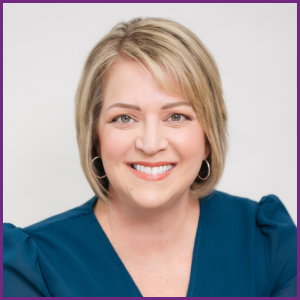 Joy Lantz, RDH, PHDH, COM®, IBCLC, FADHA is a dental educator, consultant, and clinician dedicated to advancing integrative, prevention-focused care. She earned her certification in orofacial myology through the International Association of Orofacial Myology (IAOM) in 2017 and currently serves as IAOM President. In 2022, she became an International Board-Certified Lactation Consultant (IBCLC), further deepening her whole-body approach to oral health. Joy is the founder of Oral Function Specialties, where she educates patients, parents, and professionals while consulting with dental practices seeking to thoughtfully integrate airway-centered care. Her passion lies in empowering dental and medical teams to collaborate in early screening for oral myofunctional and airway disorders to support lifelong health.