By Jacy McKinney, RDH
September 17, 2026
In dental hygiene, we often say prevention is the goal. Yet in daily practice, one of the most common early signs of active disease is still normalized by patients — and sometimes minimized in clinical conversations: bleeding.
A simple statement has helped me anchor both diagnosis and patient education: Healthy gums do not bleed.
This phrase is not fear-based, sales-based, or dramatic. It is clinical, clear, and patient-centered. It creates a shared standard that is easy to understand and hard to misinterpret. When patients hear it consistently — and when they are shown what it means in their own mouths — they begin to connect symptoms, risk, and treatment value in a way that supports informed decisions.
Why This Message Matters Now
Many hygienists are balancing compressed schedules, production pressure, and inconsistent handoffs between clinical and administrative teams. In that environment, important periodontal conversations can become rushed, overly technical, or diluted by mixed messaging.
Patients may leave with a partial understanding: “My gums bleed a little, but that is normal for me.” “I thought this was just a regular cleaning.” “I will wait until my next visit.”
When bleeding is framed as common instead of clinically significant, delayed treatment becomes more likely. That is where underdiagnosis, undertreatment, and supervised neglect can begin.
As hygienists, our role is not to pressure patients. Our role is to assess accurately, educate clearly, document responsibly, and recommend appropriately.
Trust Is Built through Clarity, Not Pressure
Over time, I have found that patient trust grows when we separate two important roles. The clinical role of the hygienist is to identify findings, explain risks, present the treatment rationale, and focus on health benefits. The financial and benefits role of the front office is to review fees, insurance estimates, and payment logistics.
This boundary protects the clinical conversation. It keeps the focus on where it belongs: the patient’s condition and outcomes. Patients are more likely to accept care when they feel informed, not sold to.
A practical chairside transition can sound like this: “Mrs. Smith, today I am seeing bleeding in several areas around your gums. Healthy gums do not bleed. Bleeding tells us that the tissue is not healthy and may indicate inflammation or infection that needs attention. My goal is to show you what I am seeing, explain what it means, and help you understand the next step.”
That kind of statement does several things at once. It names the findings. It avoids blame. It keeps the focus on health. And it gives the patient a clear reason to listen.
Chairside Communication That Helps Patients Understand
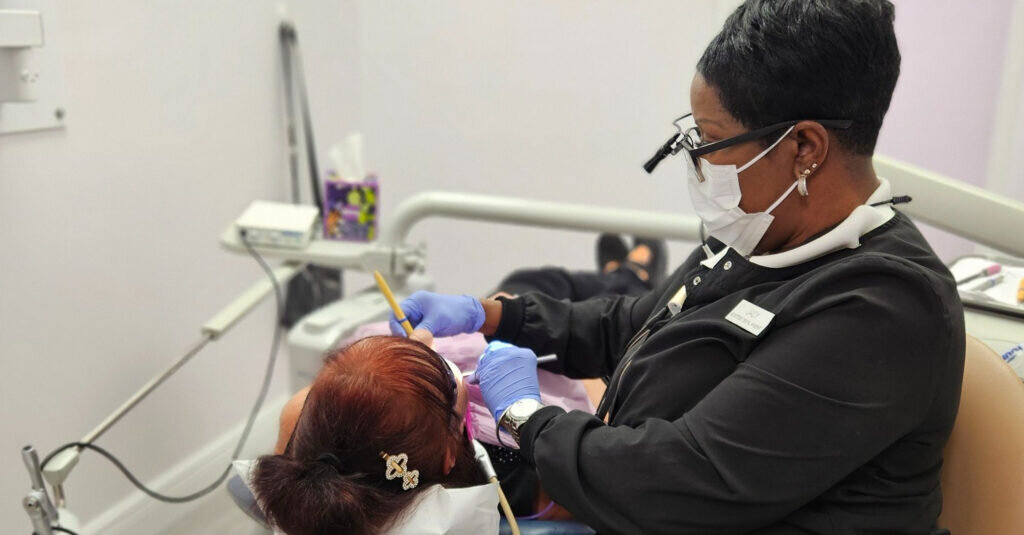
Jacy McKinney, RDH, providing patient-centered preventive care, where clinical treatment and clear communication work together to support long-term oral health. (Photo courtesy of J. McKinney)
It Starts before the Instruments
For me, patient education begins before I ever pick up an instrument. It starts with the introduction, the small talk, and the medical history review. That first conversation matters because patients often tell us important things through storytelling that may not be written clearly on a form. A change in medication, stress, smoking, dry mouth, diabetes control, recent illness, or fear of the dental visit can all give us clues before we begin the clinical assessment.
Medical history gives us context. The conversation gives us a connection.
From there, the assessment becomes the baseline. I often tell hygienists that periodontal assessment is our GPS. It tells us where we are, where the concerns are, and where we need to focus before treatment begins. Without that baseline, we may be working without a clear map.
When I call out probing depths, I want the patient to understand what they are hearing. I explain it simply: “Ones, twos, and threes are generally the healthier numbers we want to hear. When we begin hearing the fours and above, those are areas of concern. The higher the number, the deeper the pocket, and the more attention that area needs.”
I also want patients to listen to bleeding points. Bleeding is an important sign, but it is not the only sign we assess. Some patients may have deeper pockets, bone loss, or risk factors without obvious bleeding or visible inflammation. This can happen for several reasons, including smoking, medications, medical conditions, or a long-standing disease process. That is why we look at the full pattern: pocket depths, bleeding, tissue tone, plaque and calculus, radiographs, bone levels, attachment changes, mobility, furcation involvement, medical history, and risk factors.
Show Patients What You See
After the assessment, I use visual aids, mirrors, and the patient’s own findings to explain what is happening. I may show a healthy example and say: “This is what we think about when we hear two and three. The tissue is healthier, tighter, and there is no bleeding.”
Then I compare that to the areas where we heard deeper readings: “When we hear fives, sixes, or sevens, that tells us the pocket is deeper. Bacteria and hard buildup can collect below the gumline where your toothbrush and floss cannot reach well.”
This is where the patient often begins to understand. They are no longer just hearing numbers. They are seeing what those numbers mean.
I explain that bacteria and buildup collect along the tooth and root surface. The longer that buildup remains, the older, thicker, and harder it can become. Over time, those irritants can contribute to bleeding, inflammation, odor, tenderness, deeper pockets, attachment loss, and changes in bone support.
The goal is not to scare the patient. The goal is to help them understand why the recommendation matters.
When treatment is needed, I explain what we are trying to accomplish: “We need to remove the hard deposits and bacteria from the areas you cannot reach on your own. Once those irritants are reduced and the area is kept clean, the tissue has a better opportunity to heal, tighten, and respond.”
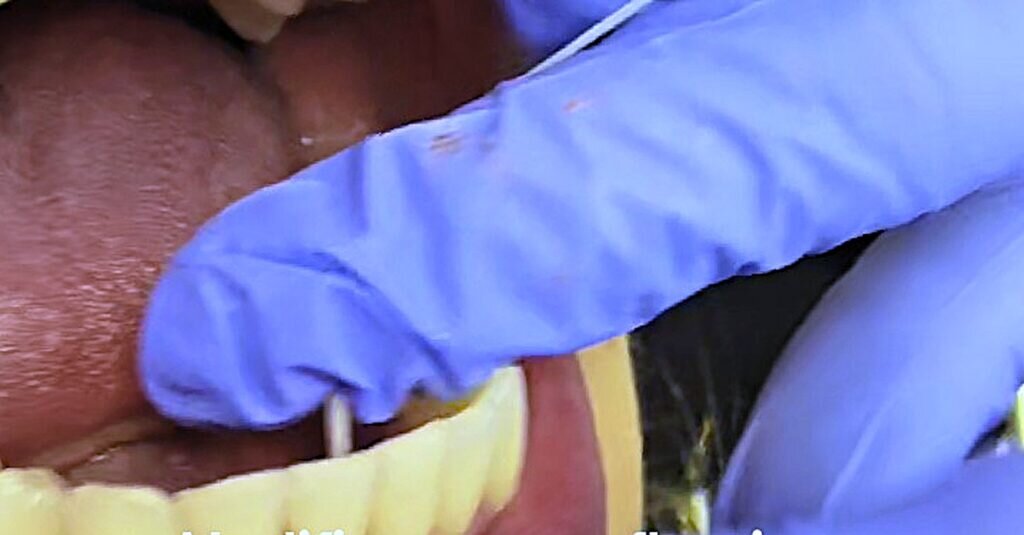
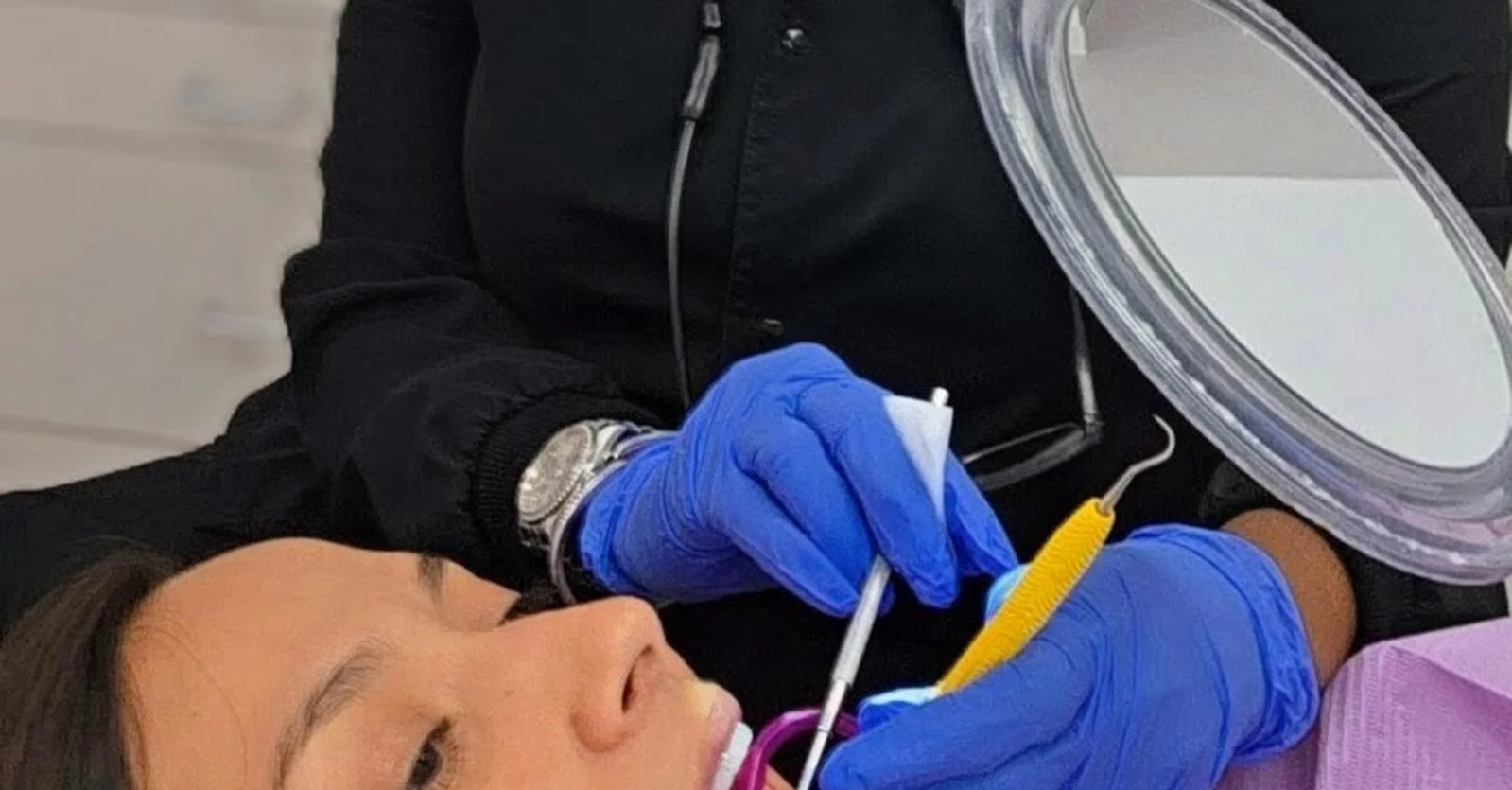
Demonstrating proper flossing technique gives patients the opportunity to see and practice what effective home care looks like. For this patient, correcting her technique led to improved gingival health and resolution of the bleeding she had been experiencing. (Photo courtesy of J. McKinney)
Home Care Is Part of the Treatment
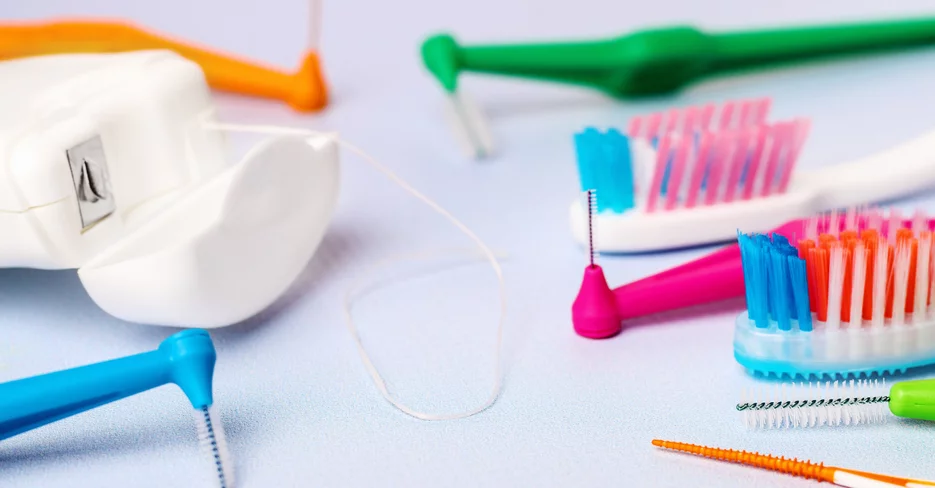
Home-care instruction is just as important as clinical treatment. I do not only tell patients to floss. I show them how to floss. I explain that the goal is not just to pop the floss between the teeth. The patient needs to hug the side of the tooth and move the floss up and down along the wall of the tooth. That is how we disrupt bacteria on the surface.
When appropriate, antimicrobial support may also help reduce bacteria in areas that are difficult for the patient to reach at home. The key is to explain why it is recommended, how it supports healing, and what the patient’s role is between visits.
The Follow-Up Makes It Real
The follow-up visit is where education becomes real for many patients. When they return, often after about six weeks, depending on the clinical situation and practice protocol, we reassess. If there is less bleeding, less tenderness, better tissue response, or improved home care, I make sure the patient sees that progress.
I may say: “Last time, this area was bleeding and measuring deeper. Today, I am seeing much less bleeding. That tells us the tissue is responding. You have been doing the work, and it shows.”
Patients need that encouragement. Many people come to dental visits expecting pain, judgment, or disappointment. When we show them improvement and compliment their effort, we help them build confidence instead of fear.
If a patient says, “I missed a few days,” or “I forgot sometimes,” I still try to reinforce the progress they made: “You may not have been perfect, but you were consistent enough to make a difference. Let us build from that.”
That moment matters. Patients begin to understand that periodontal care is not simply something being done to them. It is something they are part of. They can see the difference. They can feel the difference. And they begin to understand why healthy gums do not bleed.
A 30-Day Chairside Adoption Plan
A message becomes powerful when it becomes consistent. “Healthy gums do not bleed” is simple, but it works best when the entire hygiene visit supports the same message: assess clearly, explain simply, show the patient, and reinforce progress.
Establish the Baseline
Make periodontal assessment the clinical GPS for every visit. Review the medical history, listen to the patient’s story, assess tissue health, and record pocket depths and bleeding points. Use the same plain-language framing for probing depths at the chair.
Show, Do Not Just Tell
Use a mirror, intraoral photo, periodontal chart, radiograph, or visual aid to connect the patient’s findings to what they can understand. Instead of only saying, “You have inflammation,” show the patient where the concern is and why it matters.
Strengthen the Patient’s Home-Care Role
Give patients specific instructions for the areas that need attention. Reinforce the flossing technique described above, hugging the tooth and moving up and down along its wall.
Reinforce Progress and Consistency
At the follow-up or reevaluation, compare current findings to the baseline. Show the patient what improved. Use encouraging language: “Last time, this area was bleeding. Today, I am seeing less bleeding and a healthier response. Your effort is making a difference.” If improvement is not where it needs to be, use the findings to guide the next conversation without shame.
The purpose of this 30-day plan is not to add pressure to the hygiene visit. It is to create a repeatable way to help patients understand what we see, why it matters, and what they can do next.
Final Thought
Hygienists are passionate about helping patients, but many need simple language and repeatable systems that make hard conversations easier. We see the disease process every day. We hear the same patient fears, the same confusion, and the same hesitation. The opportunity is to give those moments a clear name, a clear explanation, and a clear next step.
When we show patients what we see, they often leave feeling less fearful and more empowered. They may say, “I learned so much today,” or “No one ever explained it to me like that before.” That is the kind of education that stays with people.
Healthy gums do not bleed. It is a simple phrase, but when it is supported by assessment, visual education, ethical communication, and consistent follow-up, it can change the way patients understand their oral health.
____________________________________
 Jacy McKinney, RDH, is the founder of RDH97 Consultant/Mgmt. LLC, a South Florida dental hygiene coaching, training, and operational consulting company, and she is an ADHA member. With 27 years of chairside experience, she helps dental practices strengthen onboarding, clinical calibration, patient communication, hygiene workflow, and team-wide implementation. Her work is grounded in ethical, patient-centered care and the belief that lasting improvement requires the full team to be trained, aligned, and committed to the same system. Jacy can be contacted at [email protected].