By Lancette VanGuilder BS, RDH, PHEDH, CEAS, FADHA
March 9, 2026
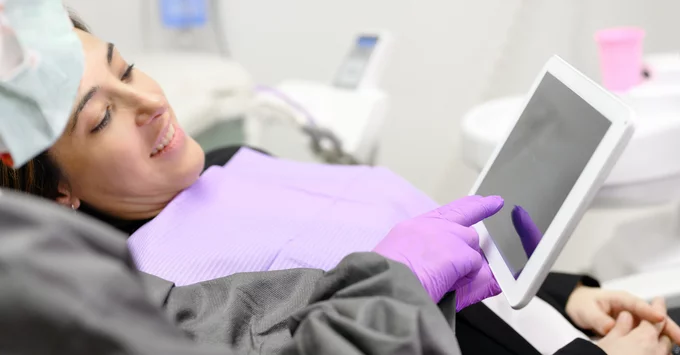
A patient settles into the chair for what looks like a routine hygiene visit. As you review their health history, they mention feeling tired most days. They wear a nightguard for teeth grinding and often wake up with headaches. Their partner complains about loud snoring.
During the assessment, you notice occlusal wear, crowded dentition, a scalloped tongue and mild inflammation in the oropharyngeal tissues. Individually, these findings may not seem unusual—but together they begin to tell a story.
It’s a story about sleep.
For millions of people, sleep is far from restorative. Instead of optimal breathing throughout the night, the airway repeatedly narrows or collapses, disrupting sleep and reducing oxygen levels. Many individuals have no idea it is happening.
Sleep-disordered breathing, including mouth breathing and obstructive sleep apnea (OSA), is among the most common yet underdiagnosed health conditions today. Dental hygienists may be the first clinicians to see the signs.
Why Sleep Matters
Sleep is a biologically active process essential for physical repair, metabolic regulation, cognitive function and immune health. During sleep, the body restores tissues, regulates hormones, consolidates memory, and clears metabolic waste products from the brain.¹
Both sleep duration and sleep quality are critical to overall health. Adults typically require seven to nine hours of sleep per night, yet nearly one-third of adults report sleeping less than recommended levels.² When breathing is disrupted overnight, restorative sleep is too, with consequences that extend well beyond fatigue, including cardiovascular disease, hypertension, diabetes, obesity, depression and impaired cognitive performance.³ In children, inadequate or disrupted sleep can affect growth, behavior and learning.
Understanding why sleep matters helps explain why identifying airway dysfunction matters, and why dental professionals are increasingly part of that conversation.
The Prevalence of Sleep-Disordered Breathing
Sleep-related breathing disorders affect a significant portion of the population. Research estimates that up to 38% of adults worldwide experience obstructive sleep apnea, with as many as 90% of cases remaining undiagnosed.⁴
More recent estimates suggest that more than 80 million adults in the United States may have obstructive sleep apnea, representing nearly one-third of the adult population.⁵
Sleep-disordered breathing also affects children. Studies estimate that 10-12% of children experience habitual snoring, a key clinical sign associated with pediatric sleep-disordered breathing and airway obstruction.⁶
Despite these numbers, many individuals remain unaware of the condition. Symptoms often develop gradually and may be attributed to stress, aging or a demanding lifestyle.
Common signs may include:
- Snoring
- Morning headaches
- Daytime fatigue or brain fog
- Difficulty concentrating
- Irritability or anxiety
- Restless sleep
- Reduced exercise tolerance
Because these symptoms can appear subtle or nonspecific, patients rarely raise them during medical visits. Yet there is one healthcare environment where early warning signs frequently appear—the dental operatory.
Dental Hygienists Play a Critical Role
Dental hygienists routinely observe oral and craniofacial development and anatomical features that may reflect underlying airway compromise. While these findings alone do not diagnose sleep-disordered breathing, they can provide important clues that breathing during sleep may be restricted or disrupted.
Clinical findings that may signal airway dysfunction
Scalloped tongue
A crenated tongue often reflects limited oral space or forward tongue posture used to help maintain airway patency. During sleep, reduced muscle tone allows the tongue to fall backward, narrowing the airway.
Bruxism or occlusal wear
Sleep bruxism may represent a protective neurologic response to airway obstruction. Brief arousals activate the jaw muscles, moving the mandible forward to reopen the airway.
Narrow palatal architecture
A high, narrow palate is associated with restricted nasal airway space and altered craniofacial development.
Mouth breathing
Habitual mouth breathing may signal nasal obstruction and contribute to airway instability during sleep.
Enlarged tonsillar tissue
Tonsillar hypertrophy can narrow the airway and increase airflow resistance.
Xerostomia
Patients who breathe through their mouth overnight often wake with dry mouth.
Retrognathic jaw position
A retruded mandible can reduce airway space behind the tongue, increasing the risk of obstruction.
Recognizing patterns such as these allows dental hygienists to identify patients who may benefit from further evaluation.
Screening Tools for Sleep-Disordered Breathing
Simple screening questions can help identify patients experiencing potential sleep-related breathing issues. Asking about snoring, daytime fatigue, and difficulty concentrating can reveal patterns that warrant further discussion. Validated screening tools such as the STOP-BANG questionnaire or the Epworth Sleepiness Scale may help identify adults at higher risk. The FAIREST-6 (Functional Airway Evaluation Screening Tool) has also been proposed as a clinical checklist used primarily in pediatric airway and dental settings to identify structural and functional findings associated with sleep-disordered breathing.⁷
While screening tools can raise awareness, sleep-disordered breathing can only be definitively diagnosed through a sleep study, conducted either in a sleep laboratory or through validated home sleep testing. Equally important is a comprehensive airway evaluation to identify underlying contributors to airway obstruction, which may include craniofacial structure, nasal resistance, tongue posture, muscle tone, or developmental factors.
National Professional Guidance Supports Screening
Multiple professional organizations recognize the important role dental professionals play in identifying sleep-related breathing disorders.
Policy statements from the American Dental Association (ADA), the American Academy of Pediatric Dentistry (AAPD), and the American Dental Hygienists’ Association (ADHA) encourage dental professionals to screen patients for signs of sleep-disordered breathing during routine care and collaborate with medical providers for diagnosis and management.⁸–¹1
The ADHA Standards for Clinical Dental Hygiene Practice further support this role by emphasizing comprehensive patient assessment, including evaluation of craniofacial structure, oral function, and growth and development, all of which may influence airway health and breathing patterns.¹⁰
Together, these policies reflect the growing recognition that dental professionals play an important role in identifying airway-related health concerns and facilitating interdisciplinary care.
Whole-Person Care in Dental Hygiene
Dental hygienists have long recognized that oral health is closely connected to systemic health. As prevention specialists and primary care providers of oral health, dental hygienists play an important role in assessing risk factors, identifying early signs of disease, and supporting patients’ overall health and well-being. Sleep-disordered breathing intersects with many conditions encountered in dental practice, including periodontal disease, bruxism, hypertension, diabetes, and cognitive fatigue. Recognizing these connections shifts the clinical conversation beyond a single tooth or a single finding, toward a patient whose oral health is inseparable from how well they sleep and breathe.
Myofunctional Therapy and Airway Health
Orofacial myofunctional therapy (OMT) is another area where dental hygienists are contributing to airway health. Orofacial myofunctional disorders involve abnormal patterns of muscle function affecting the lips, tongue, jaw, and airway, influencing breathing, swallowing and craniofacial development. With appropriate education and training, dental hygienists may provide myofunctional assessments and therapy designed to support nasal breathing and proper tongue posture.
A Future Rooted in Prevention
Dental hygienists have always been prevention specialists. By combining thoughtful screening, patient education, and interdisciplinary collaboration, dental hygienists can help identify sleep-related breathing disorders that might otherwise remain undiagnosed for years. For many patients, the hygiene chair is the first place anyone connects the dots between their symptoms and their airway. That conversation is routine for the clinician, and for the patient it can be the first step toward real answers.
____________________________________
References
- Lulu Xie et al. “Sleep Drives Metabolite Clearance from the Adult Brain.” Science 342, no. 6156 (2013): 373-377. https://doi.org/10.1126/science.1241224.
- Nathaniel F. Watson et al. “Recommended Amount of Sleep for a Healthy Adult: A Joint Consensus Statement of the American Academy of Sleep Medicine and Sleep Research Society.” Sleep 38, no. 6 (2015): 843-844. https://doi.org/10.5665/sleep.4716.
- Institute of Medicine Committee on Sleep Medicine and Research. Sleep Disorders and Sleep Deprivation: An Unmet Public Health Problem. Edited by Harvey R. Colten and Bruce M. Altevogt. Washington, DC: National Academies Press, 2006. https://doi.org/10.17226/11617.
- Chamara V. Senaratna et al. “Prevalence of Obstructive Sleep Apnea in the General Population: A Systematic Review.” Sleep Medicine Reviews 34 (2017): 70-81. https://doi.org/10.1016/j.smrv.2016.07.002.
- Adam V. Benjafield et al. “Estimation of the Global Prevalence and Burden of Obstructive Sleep Apnoea: A Literature-Based Analysis.” The Lancet Respiratory Medicine 7, no. 8 (2019): 687-698. https://doi.org/10.1016/S2213-2600(19)30198-5.
- Julie C. Lumeng and Ronald D. Chervin. “Epidemiology of Pediatric Obstructive Sleep Apnea.” Proceedings of the American Thoracic Society 5, no. 2 (2008): 242-252. https://doi.org/10.1513/pats.200708-135MG.
- Çağla Kondoz Torun and Başak Durmuş. “FAIREST-6 as a Screening Tool for Sleep-Disordered Breathing, Orthodontic Needs, and BMI in Children During the Mixed Dentition Period.” International Journal of Paediatric Dentistry 35, no. 6 (2025): 1153-1161. https://doi.org/10.1111/ipd.70017.
- American Dental Association. Policy Statement on the Role of Dentistry in the Treatment of Sleep-Related Breathing Disorders. Chicago: American Dental Association, October 2017.
- American Academy of Pediatric Dentistry. “Policy on Obstructive Sleep Apnea (OSA).” In Reference Manual of Pediatric Dentistry. Chicago: American Academy of Pediatric Dentistry, 2016.
- American Dental Hygienists’ Association. Standards for Clinical Dental Hygiene Practice. Chicago: American Dental Hygienists’ Association, March 2025.
- American Dental Hygienists’ Association. Policy on Airway Health and Screening for Sleep-Related Breathing Disorders. Chicago: American Dental Hygienists’ Association, October 2017.
____________________________________
 Lancette VanGuilder, BS, RDH, PHEDH, CEAS, FADHA, is the Clinical Director of Sierra Sleep, Airway & Wellness Center in Reno, Nevada, where she focuses on airway health, sleep-disordered breathing, and interdisciplinary patient care. An international speaker and advocate for prevention-focused healthcare, she also serves as President of the American Dental Hygienists’ Association (ADHA). Lancette is the host of the Beyond Breathing podcast, where she explores the connections between oral health, airway science, sleep and whole-person wellness.